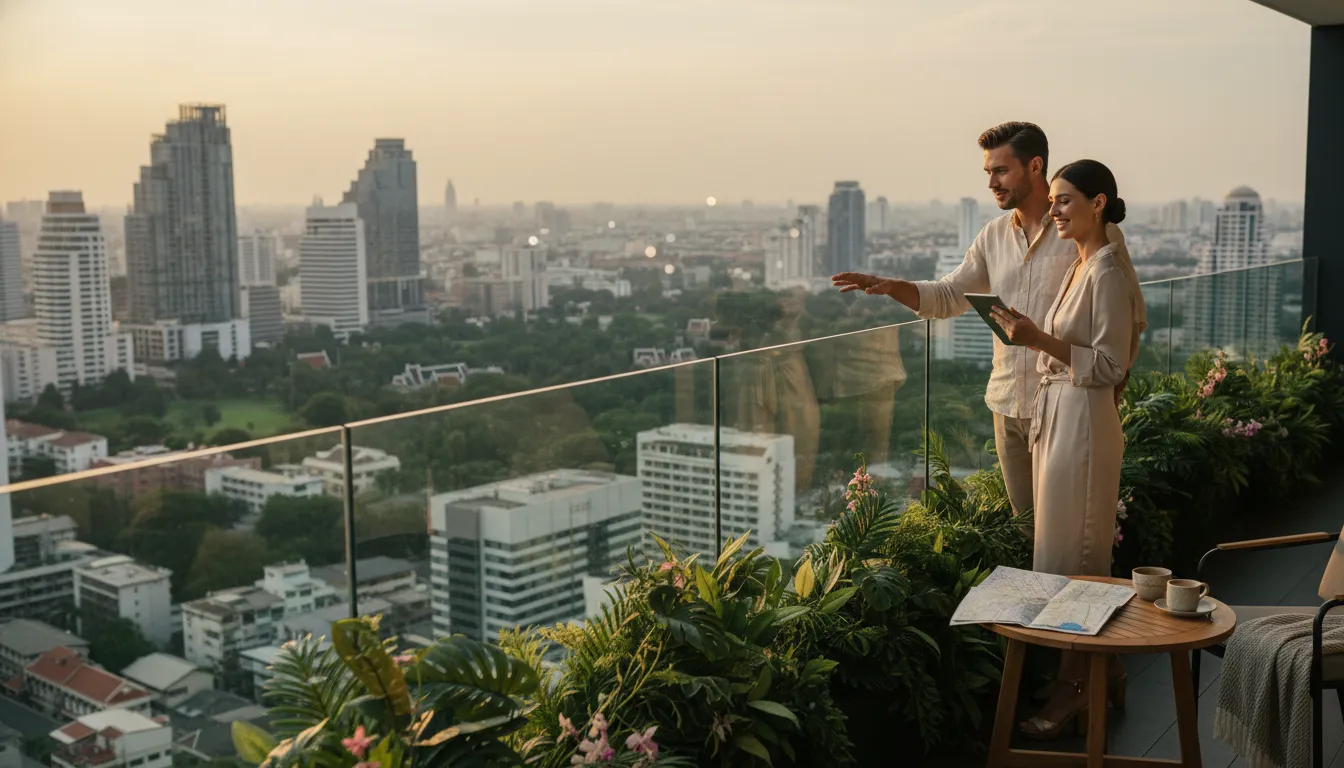
If you are planning a Couple Move to Thailand, choosing the right place to live in Bangkok can make or break the experience. The truth is that Bangkok Condos are not just about square meters and skyline views. They are about daily convenience, commuting time, building facilities, long-term costs, and how smoothly you can handle visas, healthcare, and cultural adaptation as a couple.
This guide is built for couples doing a Preparation for the Move: Visa requirements, Packing and shipping logistics, and Financial planning and budgeting, while also needing a practical plan for Finding Accommodation: Renting vs. buying property. Along the way, it covers Popular areas for expats, Cost of living comparison, Cultural Adaptation: Learning Thai language basics, Understanding Thai customs and etiquette, Navigating local cuisine and dining, Work and Income: Job opportunities for expats, Setting up a business in Thailand, Remote work possibilities, Lifestyle and Leisure: Popular tourist destinations, Socializing and meeting other expats, and the Legal and Healthcare Considerations: Healthcare system overview and insurance options that matter for real life.
Use it as a checklist before signing a lease, and as a framework for deciding which Bangkok Condos match your lifestyle.
Table of Contents
Bangkok Condos, explained: what matters most for couples
Many search results focus on “luxury vs. budget” and overlook what couples actually feel day-to-day. For a Couple Move to Thailand, the biggest condo differences show up in:
- Convenience inside the complex: gyms, coworking areas, pools, lockers, delivery pickup, and 24/7 security.
- Convenience outside the complex: access to BTS/MRT, walkability, nearby supermarkets, pharmacies, and delivery options.
- Comfort and daily livability: natural light, airflow, sound insulation, and practical storage.
- Long-term flexibility: how easy it is to switch condos later, and whether the lease structure fits your visa timeline.
- Cost predictability: utilities, maintenance fees included or not, and expected changes over time.
If you want one quick rule: choose a Bangkok condo that supports both workdays and off-days. When couples can easily switch between remote work and relaxation, the move feels easier, not harder.
Interview-style guidance: choosing the right Bangkok condo (question and answer)
What should we prioritize when selecting a Bangkok condo as a couple?
As a couple, you are balancing two schedules and two sets of preferences. The priorities usually fall into these buckets:
- Location for commuting and errands: Look for proximity to BTS/MRT and practical routes to groceries, pharmacies, and essentials.
- Building facilities that match your lifestyle: a gym may matter more than a lobby if both of you stay active; a pool can be a weekend anchor; coworking space can replace coffee shop work.
- Indoor comfort: A bright living room, reliable AC, sound control, and a layout that supports shared time.
- Wi-Fi and remote work readiness: test internet speed, confirm power backup or stability, and check whether coworking space is usable.
- Lease structure: confirm security deposit, upfront rent, contract length, and whether renewal is easy.
For couples, a “great view” is a bonus, but the real wins are low friction: you can buy food fast, work without stress, and rest without leaving the area.
Which facilities in Bangkok condos are worth paying for?
Not all amenities are equally valuable. Spend your budget where you will use it weekly:
- Gym and workout spaces: If one partner trains daily, prioritize a building with a functional gym and space for stretching or light training.
- Co-working or business centers: helpful for Remote work possibilities and minimizing “coffee shop hopping.”
- Pool and outdoor areas: more important than many couples expect, especially when you want Lifestyle and Leisure: Popular tourist destinations but still need downtime at home.
- Sauna or wellness rooms: can improve recovery routines for active couples and make the building feel like a retreat.
- Delivery and pickup logistics: lockers or a package pickup desk can be a massive daily time saver.
- Secure access and visitor management: Face ID or keycard entry can reduce hassle and improve comfort.
When evaluating amenities, ask yourself: “Will we actually use this, or will it feel like unused potential?”
How close should a condo be to BTS/MRT?
A practical target for a Couple Move to Thailand is “fast to transit,” not “perfectly walkable.” Since Bangkok traffic can be unpredictable, BTS/MRT proximity usually reduces stress.
- Best case: 2 to 10 minutes to a station on foot.
- Good case: near a major road with easy ride options, combined with fast transit access for longer trips.
Also consider your routine: commuting for work is one thing, but you may also use transit for weekend Socializing and meeting other expats, grocery runs, and events.
What are popular areas for expats in Bangkok?
Popular areas for expats tend to offer a mix of transit access, dining, and neighborhood comfort. While preferences vary, couples commonly look at:
- Sukhumvit: lots of expat-friendly amenities, nightlife, and international food options.
- Asok and Phrom Phong: strong transit and modern condo stock.
- Ratchadaphisek: business and entertainment hubs, good for work access.
- Huai Khwang: often chosen for a balance of convenient city access with a calmer residential feel.
- On Nut and surrounding areas: mixed local and international vibe, convenient transportation.
For a couple planning both work and recovery, the “right” area is the one that reduces daily travel and keeps you near your essentials.
Preparation for the Move: Visa requirements and how they affect housing decisions
Housing choices should align with your legal timeline. A condo lease can lock you into costs, so your Preparation for the Move: Visa requirements should come early in the process.
Why does visa planning change what kind of condo lease you should sign?
Because contract length and renewal terms must match your legal stay. If you are still finalizing a visa plan, consider:
- Shorter initial stays (if available) to avoid committing too long before you understand your neighborhood routine.
- Clarity on move-in deadlines and whether documents need to be submitted before you can move.
- Exit flexibility: ask about penalties for breaking a lease, and how deposit returns work.
For couples, the most stressful scenario is choosing a condo that feels perfect but does not align with your legal residency and move timeline.
Remote work and visa alignment
If you are doing Remote work possibilities, some couples select visa paths that support longer stays. Regardless of which visa route you pursue, confirm:
- Whether your work setup is consistent with visa conditions.
- How often you will need entry or renewal steps.
- That you can maintain stable health coverage during travel windows.
Packing and shipping logistics: what to bring for two people (and what to skip)
Packing and shipping logistics often determine how comfortable the first month feels. Couples usually underestimate how much daily convenience matters while settling in.
What should couples pack before leaving for Bangkok?
- Work essentials: laptops, chargers, backup drives, and any specialty equipment.
- Medications and prescriptions: bring enough for the first weeks, plus documents if you need them.
- Clothing for humidity: lightweight outfits, breathable fabrics, and comfortable shoes.
- Basic toiletries: you can buy locally, but having familiar staples reduces stress.
- Documents: passport copies, visa documents, insurance details, and emergency contacts.
What is usually better to buy after arrival?
- Large household items that you can replace locally.
- Bulk consumables if shipping costs are high.
- “Hard-to-transport” electronics unless they are essential for work.
As a couple, focus on the fastest route to comfortable routines rather than packing everything “just in case.”
Financial planning and budgeting: realistic monthly cost models for couples
Financial planning and budgeting is not only about rent. In Bangkok Condos, costs come from utilities, building fees, commuting, eating out, and social life.
How to build a monthly budget for two in Bangkok
Use a simple framework that you can adjust:
- Housing: rent plus any expected fees.
- Utilities: electricity can be significant due to AC.
- Internet: if not included, add a stable line.
- Food: separate “daily local meals” from “weekly dining out.”
- Transport: rideshare, BTS/MRT passes, and occasional taxis.
- Healthcare and insurance: monthly average and emergency buffer.
- Leisure: coworking snacks, gym memberships (if needed), rooftop plans, movies, trips.
Cost of living comparison: how Bangkok often feels cheaper than Europe
Many couples report that daily living can feel cheaper than Europe, but the comparison depends on your lifestyle:
- If you eat local and use transit, costs often stay controlled.
- If you prefer frequent international restaurants and frequent taxis, spending rises.
- Condo rent varies widely depending on building quality, location, and views.
The key is to budget based on your actual habits as a couple, not on assumptions.
Finding Accommodation: Renting vs. buying property (for couples who are not sure yet)
For most couples doing a first move, Renting vs. buying property should be guided by time horizon and uncertainty.
When renting is the smartest option
- You are still learning neighborhoods and daily routines.
- Your visa timeline might require mobility.
- You want to test commute patterns for Remote work possibilities and leisure life.
When buying can make sense
- You have a long-term plan and strong certainty about your preferred district.
- You understand all legal requirements and financing constraints.
- You can absorb higher upfront costs and maintenance responsibilities.
For many couples, the “best plan” is rent for 6 to 12 months, then evaluate buying after you know what you will actually use in a condo daily.
Remote work possibilities: how condo facilities support your work life
For a Couple Move to Thailand where one or both partners are working remotely, condo facilities can replace a lot of work friction.
What to test before committing if you will work from home
- Internet stability: check speed and reliability at different times of day.
- Noise level: can you take calls without background interruptions?
- Lighting: natural light helps both productivity and mood.
- Dedicated work areas: a proper desk matters for couple routines.
- Backup options: is there building co-working access when you need a change of environment?
A condo that supports workdays reduces stress, and stress reduction is often the biggest difference couples feel between Europe and Bangkok living.
Work and Income: Job opportunities for expats and building a long-term plan
Not every couple will work locally, but some plan for options. Common paths include:
- English teaching (with credential requirements)
- Sales and client work for international markets
- Specialized freelance roles
- Operations or remote roles with global companies
If you are considering Setting up a business in Thailand, treat it as a separate project: research permits, hiring rules, tax obligations, and whether your visa conditions support business activity.
Cultural Adaptation: Learning Thai language basics and surviving day one
Cultural adaptation is not about becoming fluent immediately. It is about reducing friction with locals and feeling confident enough to navigate daily life.
Learning Thai language basics that actually help couples
- Hello and thank you in Thai
- Where is…? for transport and errands
- How much? when shopping at local markets
- I need help for pharmacies or support desks
- Basic phrases for ordering food and asking about ingredients
Understanding Thai customs and etiquette
- Be mindful with greetings and politeness
- Respect religious sites and local routines
- Use a calm tone in public interactions
- Follow signage about shoes and entry rules where applicable
Couples often find that adopting small etiquette habits early makes Socializing and meeting other expats easier too, because locals are more responsive and patient.
Navigating local cuisine and dining as a couple
Navigating local cuisine and dining can feel exciting and overwhelming. A good plan helps couples enjoy Thai food without stress.
How to approach Thai food when you have different preferences
- Choose one “safe start” dish each, then share.
- Use spice adjustments: ask how spicy a dish is before ordering.
- Try fresh fruit and simple snacks early to build confidence.
- When you are unsure, go for grilled or noodle-based dishes that are easy to understand.
Make dining easier with a weekly rhythm
A practical routine for couples is:
- Weekdays: local meals or casual dining near your condo
- One “experience meal” per week: rooftop, themed restaurant, or a special menu
- Weekend: try a new neighborhood food spot after a leisure plan
This balances discovery with consistency, which is helpful during early Cultural Adaptation.
Lifestyle and Leisure: Popular tourist destinations and Bangkok rooftop life
Lifestyle and Leisure: Popular tourist destinations matter because they help couples recharge and bond. Bangkok’s condo lifestyle often includes a major advantage: you can enjoy leisure close to home.
How to balance work and relaxation in a condo lifestyle
- Use the gym and wellness facilities for predictable recovery.
- Plan “rooftop time” on a calendar the same way you plan meetings.
- Set boundaries for remote work: end times matter for relationship health.
- Keep at least one low-effort activity at home weekly (pool, sauna, cinema room).
Couples often underestimate how much “staying in” can feel like luxury when the building is well designed.
Socializing and meeting other expats: how couples find community
Socializing and meeting other expats helps couples feel grounded. It can also reduce culture shock and loneliness.
Where couples typically meet others in Bangkok
- Coworking spaces and building community areas
- Gyms, classes, and sports facilities
- Language exchange meetups and expat events
- Community groups related to remote work
- Rooftop events and expat dining meetups
Look for a mix of “structured” and “casual” events. Structured events help you start faster, and casual hangouts make friendships last.
Legal and Healthcare Considerations: Healthcare system overview and insurance options
Legal and Healthcare Considerations are non-negotiable for long stays. Couples should treat insurance and healthcare setup as part of the move, not an afterthought.
Healthcare system overview: what expats should know
Thailand has a mix of public and private healthcare. Many expats use private hospitals for shorter wait times and English-friendly support in major areas.
Before you need care, make sure you understand:
- Which hospitals and clinics are nearby
- Emergency numbers and how to request assistance
- How billing works at private facilities
Insurance options for couples
Common insurance approaches include:
- International health insurance for predictable coverage across borders
- Local plans (if available and appropriate for your residency status)
- Travel insurance for visa runs and short trips
For couples, the best insurance is the one that reduces uncertainty during emergencies and allows easy hospital access.
Legal residency and citizenship: what to plan for long-term
Citizenship is a long-term topic and depends on individual circumstances. What couples can do early is plan for residency stability:
- Keep documents organized
- Track renewal timelines
- Understand what changes require notification
When you plan well, housing and lifestyle feel calmer.
Challenges and Tips: dealing with culture shock, safety, and security
Challenges and Tips: Dealing with culture shock is normal. Even couples who “love everything” still hit adjustment phases, often related to routine and communication.
Common culture shock triggers for couples
- Humidity and daily temperature changes
- Different traffic patterns and commuting expectations
- Different grocery and ingredient availability
- Noise level or sound habits in neighborhoods
- Understanding local service processes (payments, receipts, delivery)
Safety and security tips for condo living
- Use building security access correctly (keycards, Face ID, etc.)
- Manage visitors responsibly and follow building rules
- Choose well-lit routes for evening walks
- For online work, secure your devices and accounts
Security is not only about personal safety. It also includes reliable condo systems, delivery handling, and predictable building management.
Checklist: how to evaluate Bangkok Condos before you sign
Use this checklist on your next property visit. It is designed to match the real decision points couples face during a Couple Move to Thailand.
Location and commute
- How long is the walk to BTS/MRT at peak hours?
- Is the area comfortable at night?
- Are supermarkets, pharmacies, and dining within short reach?
Remote work readiness
- Is internet stable and fast enough for calls?
- Is there adequate lighting for a desk setup?
- Is there a coworking option in the building?
Building facilities
- Is the gym practical for your training style?
- Is there a pool and outdoor space you will use?
- Do you have wellness options like sauna?
- How does the delivery/pickup process work?
Unit comfort and layout
- Does the apartment get enough airflow to manage humidity?
- Are bedrooms and living areas separated enough for couple routines?
- Is the bathroom and storage practical for two people?
- Is sound insulation acceptable?
Contract and total monthly cost
- What is the deposit and upfront payment schedule?
- Is electricity usage significant in the unit?
- Are utilities and fees included or separate?
- What is the renewal process?
When you apply this checklist consistently, you reduce the risk of choosing a condo that looks great online but feels wrong in real life.
Tips from other couples who moved: practical lessons to apply
Here are patterns that show up when couples succeed after a move:
- Prioritize routine: the best condo is the one that supports your day-to-day comfort.
- Plan for work-life balance: coworking and wellness facilities reduce burnout.
- Do one “new experience” each week: Thai cuisine, parks, markets, or a rooftop outing.
- Reduce decision fatigue: keep utilities and grocery choices simple near your home.
- Be realistic about spending: Cost of living comparison depends on how often you add taxis and international dining.
- Document everything: for visas, healthcare, and move logistics.
Couples who treat the move like a system tend to feel happier faster.
FAQ: Bangkok Condos for couples moving to Thailand
How much should couples budget for a Bangkok condo?
It depends on the district, unit size, and building amenities. A practical approach is to budget rent plus utilities (especially electricity), then add a realistic lifestyle buffer for food, transport, and leisure. Many couples find their total monthly spending can be lower than in Europe, especially if they eat locally and use transit.
Are Bangkok Condos good for remote work?
Yes, many Bangkok Condos are set up for remote work, especially those with stable internet access and buildings that offer coworking spaces. Before signing, test internet reliability and check noise levels for calls.
Which areas are popular for expat couples?
Common choices include Sukhumvit, Asok/Phrom Phong, Ratchadaphisek, On Nut, and Huai Khwang. Couples typically pick areas that balance transit access with neighborhood comfort and convenient daily errands.
What should couples ask before renting a condo?
Ask about lease length, security deposit and upfront payments, electricity and utility costs, internet availability, building facility access, delivery/pickup rules, and whether renewal or contract changes are easy.
Is it better to rent or buy property in Bangkok when you are new?
For most couples, renting is smarter at first because it gives you time to learn neighborhoods, confirm your visa timeline, and adjust to Cultural Adaptation before making a long-term purchase decision.
How do couples handle visa changes while living in a condo?
Align your lease timeline with your legal residency plan. Track renewal dates, keep documents organized, and consider how much flexibility you need for travel. This prevents expensive disruption if visa requirements force a move or schedule change.
What about healthcare and insurance for expats?
Many expats rely on private hospitals for convenience. Couples should confirm emergency access, understand billing practices, and choose insurance that covers medical needs during both stays and travel windows.
Takeaway: choosing Bangkok Condos that make the move feel easier
A Couple Move to Thailand becomes significantly smoother when your Bangkok condo supports your routine: commuting, remote work, wellness, dining, and social life. Before you sign, connect your housing decision to your Preparation for the Move: Visa requirements, Packing and shipping logistics, Financial planning and budgeting, and your broader plan for Cultural Adaptation.
If you choose a condo based on real daily convenience, stable work setup, and practical building facilities, Bangkok Condos can do more than house you. They can help you settle in quickly, reduce culture shock, and build a lifestyle you actually want to stay in.
Comments
Post a Comment